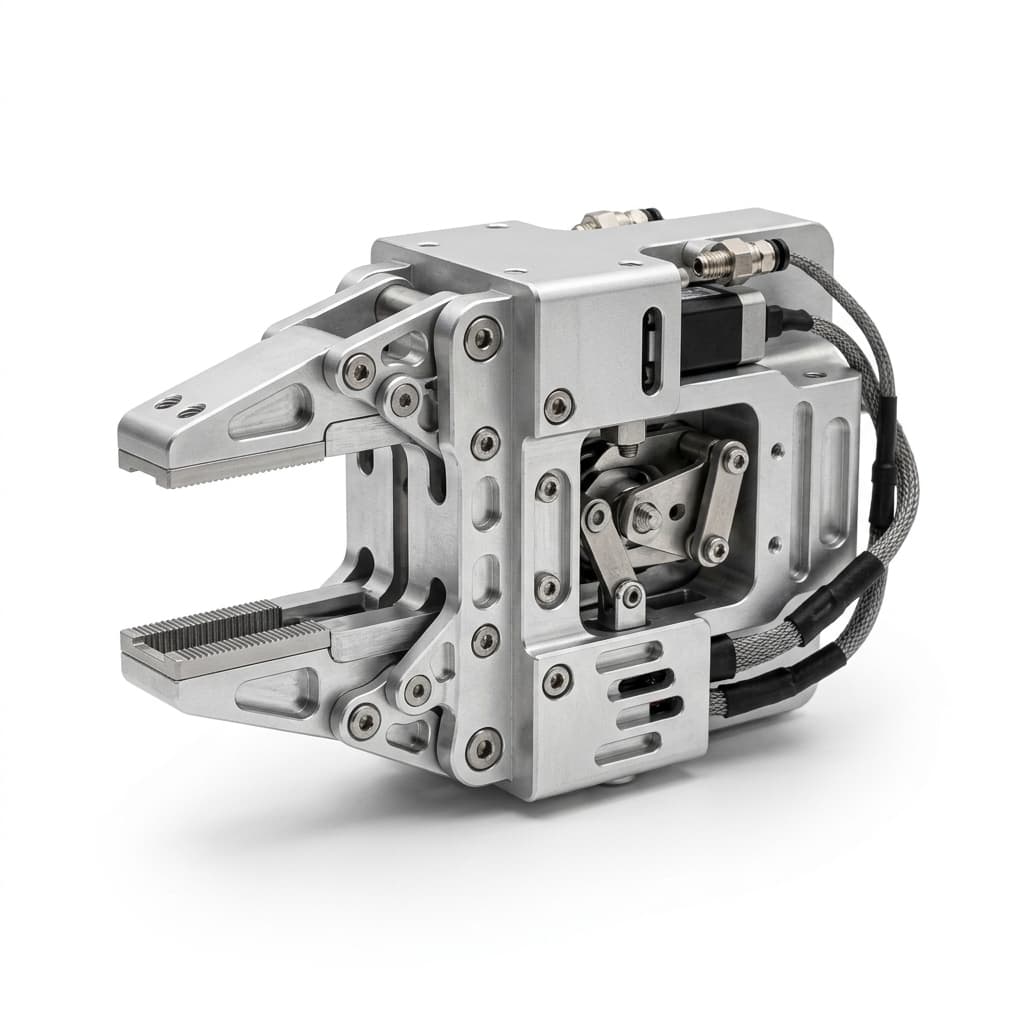
EU CBAM Data-Readiness for CNC Aluminum Components: A Procurement Checklist
Use this 2026 procurement checklist to source CNC aluminum components for EU CBAM readiness: emissions evidence, supplier questions, and RFQ controls.
One-line decision (as of July 2026): With the EU Carbon Border Adjustment Mechanism (CBAM) definitive regime fully in effect, procurement teams buying CNC aluminum hardware must transition from asking suppliers for "lead time and cost" to demanding "embedded emissions data and material yield rates." Failure to do so shifts the carbon tax burden directly onto the importer of record.
This guide translates the 2026 EU CBAM regulations into actionable sourcing criteria for OEM engineering, NPI, and procurement teams buying precision machined aluminum parts globally. If your supply chain relies on CNC machined components (e.g., thermal cold plates, structural robotic arms, actuator housings) imported into the European Union, this checklist will help you avoid supply chain disruptions and unexpected carbon tariffs.
Related capability pages: Two-Phase D2C Cold Plate CNC, Megawatt CDU Manifold Machining, Motion Hardware Hub, RFQ Toolkit, Quality / Validation.
For robotics, actuator-adjacent, or magnetic-motion aluminum hardware, combine CBAM data collection with drawing-level CTQ review. The same RFQ package should identify material origin, finish records, inspection evidence, and whether the part is a rotor/stator carrier, encoder housing, or bearing/shaft/flange interface.
Applicability Boundary (Who Should Use This Guide)
Use this page if your team manages the procurement, supply chain, or engineering specifications for aluminum or steel components that are machined outside the EU and imported into the European single market. Treat it as a sourcing and RFQ readiness checklist, not as customs classification or legal advice.
This guide is less relevant if you only source plastics, electronics, or components exclusively for domestic non-EU markets (though similar carbon tracking legislation is being proposed globally).
The Aluminum Problem in CNC Machining: Yield and Emissions
Under the CBAM definitive regime, importers must purchase and surrender CBAM certificates corresponding to the embedded emissions of the imported goods. For precision machining, aluminum is a high-risk category.
Why? Because CNC machining is a subtractive process. The embedded emissions of a finished aluminum component are not just based on the weight of the final part, but on the total amount of raw material consumed to make it, plus the energy used during the machining process.
The Buy-to-Fly Ratio Penalty
The "Buy-to-Fly" ratio (or material yield) is the ratio of the mass of the starting billet to the mass of the finished part. In aerospace and high-performance robotics, a buy-to-fly ratio of 10:1 or even 20:1 is common.
If a supplier uses a 10 kg billet to machine a 1 kg cold plate, the CBAM penalty is largely calculated on the emissions generated to produce that 10 kg of raw aluminum, unless the supplier can prove that the 9 kg of chips were recycled efficiently and provide primary data for the energy consumed. Without primary data, the EU applies punitive default values.
Key Variables Affecting Embedded Carbon in CNC Parts
To control CBAM costs, procurement must understand the variables that drive embedded emissions in the machine shop:
- Billet Origin and Smelting Power Source: Aluminum smelted using hydroelectric power (e.g., Norway, parts of Canada) has a fraction of the embedded carbon compared to aluminum smelted using coal-fired grids.
- Material Utilization (Scrap Rate): Machining from solid billet vs. near-net-shape castings or forgings.
- Machine Energy Efficiency: Older 3-axis machines running slowly may consume more energy per part than modern high-speed 5-axis machining centers.
- Coolant and Consumables: While a smaller factor, the lifecycle of cutting fluids and tooling also contributes to the factory's overhead emissions.
How to Evaluate a CNC Supplier's CBAM Data-Readiness
In 2026, a competitive CNC machining quote must include a pathway to CBAM compliance. Procurement teams should audit potential partners using the following criteria:
1. Primary Data vs. Default Values
Does the supplier provide primary emissions data (actual measurements of their facility's energy use and their material supplier's EPDs - Environmental Product Declarations), or do they rely on EU default values? Default values are intentionally set high (often the top 20% worst-performing installations) to penalize non-compliant importers.
2. Machine-Level Energy Monitoring
Can the supplier track energy consumption down to the machine cell or part level? Advanced facilities use digital twins and IoT sensors to allocate precise kWh usage to specific batches, rather than broadly dividing the factory's electricity bill by the number of parts shipped.
3. Scrap Traceability and Recycling
How does the supplier handle chips (swarf)? Are they mixed, or segregated by alloy (e.g., 6061 vs. 7075)? Segregated chips retain higher value and have a clearer recycling emissions profile, which can sometimes be factored into the overall carbon accounting if local regulations allow.
4. Cutting Tool and Coolant Optimization
Advanced machine shops optimize their tool paths and coolant usage to reduce energy consumption. High-efficiency milling (HEM) techniques can remove material faster with less spindle load, directly reducing the kWh per part. Similarly, minimum quantity lubrication (MQL) systems use compressed air and a tiny amount of oil, avoiding the energy costs associated with pumping hundreds of gallons of flood coolant continuously.
Understanding the Impact of Specific Aluminum Alloys
The choice of aluminum alloy can subtly affect the CBAM profile of your CNC parts:
- 6061-T6: The workhorse of the industry. It is highly extrudable, which means near-net-shape profiles are relatively easy and cheap to produce, drastically lowering the starting mass and reducing the buy-to-fly ratio. It is also readily available in low-carbon, hydro-smelted variants.
- 7075-T6 / 7050: Used in aerospace and high-stress robotics. These alloys are much harder to machine, leading to longer cycle times and higher energy consumption at the CNC machine. Furthermore, they are often machined from solid plate or block (hogouts), leading to massive buy-to-fly ratios (often >90% of the material becomes chips). Procurement teams buying 7075 parts for the EU market face the highest CBAM exposure risks.
- MIC-6 / Cast Tooling Plate: Often used for semiconductor fixtures due to its dimensional stability. Because it is a cast product rather than wrought, the primary energy footprint might differ. Ensuring the foundry providing the MIC-6 uses renewable energy is critical.
Near-Net-Shape Strategies to Reduce Carbon Tax Exposure
To structurally reduce the CBAM burden, engineering and procurement must collaborate on Near-Net-Shape (NNS) sourcing.
Instead of machining a complex manifold out of a massive rectangular block, the supplier starts with an investment casting, a forging, or a 3D-printed metal blank that is already close to the final geometry. The CNC machine is then only used to hit the critical tight tolerances (e.g., sealing surfaces, threaded holes, bearing fits).
Benefits of Near-Net-Shape for CBAM:
- Drastically reduces the starting mass of the raw material.
- Lowers machine spindle time, reducing energy consumption.
- Minimizes chip generation.
Structural Comparison: CBAM Carbon Accounting vs. Traditional Quoting
The following table illustrates how procurement evaluation metrics have shifted from 2023 to the 2026 CBAM era for a hypothetical 5kg aluminum actuator housing.
| Evaluation Metric | Traditional Sourcing (Pre-2026) | CBAM-Era Sourcing (2026+) | Financial Impact on EU Importer |
|---|---|---|---|
| Raw Material Selection | Lowest cost per kg (often coal-smelted). | EPD-verified, hydro-smelted or high-recycled content. | High. CBAM certificate costs scale linearly with raw material emissions. |
| Material Yield (Buy-to-Fly) | Ignored by buyer if part price is acceptable. | Heavily scrutinized. Buyer demands yield optimization. | High. Wasted material means paying carbon tax on chips. |
| Manufacturing Process | Hogging out from solid billet (fastest NPI). | Near-Net-Shape (cast/forge + finish machine). | Medium. NNS requires higher tooling capex but lowers unit carbon tax. |
| Energy Tracking | Not requested. | Machine-level IoT energy data required per batch. | Medium. Avoids punitive EU default emission values. |
| Quote Documentation | PDF with unit price, lead time, NRE. | Includes estimated embedded CO2e per unit. | Critical. Without data, goods may be held at customs or heavily taxed. |
| Supplier Relationship | Transactional, PO-by-PO. | Deep data integration (Digital Thread/Digital Twin). | Strategic. Changing suppliers requires re-auditing emissions data. |
Visualizing Embedded Emissions Flow in CNC Machining
Note: Even with recycling credits for the 9kg of chips in the billet route, the energy used to machine those chips into existence and remelt them adds permanent carbon overhead.
Sourcing Checklist for EU-Bound Aluminum Parts
Before placing your next purchase order for EU-bound machined components, ensure you and your supplier have checked these boxes:
- BOM and HTS Code Alignment: Confirm the exact Harmonized System (HS) code for the part. CBAM currently targets specific aluminum and steel headings. Know your exposure.
- Material EPD Collection: Request the Environmental Product Declaration (EPD) for the raw aluminum billet/casting from the tier-2 material supplier.
- Yield Optimization Review (DFM): Host a design review to minimize the buy-to-fly ratio. Explore extrusion, casting, or forging blanks before CNC finishing.
- Supplier Data Audit: Verify the supplier uses primary energy data collection (e.g., smart meters on 5-axis machines) rather than factory-wide averages.
- CBAM Declaration Responsibilities: Clearly define in the commercial contract who is responsible for compiling the annual CBAM declaration data package, surrender evidence, and any interim buyer handoffs (the supplier, the forwarder, or the importer).
- Scrap Management Verification: Ensure the supplier has a certified process for separating and recycling aluminum chips, as this can affect the net emissions calculation.
FAQ
1) Does CBAM apply to all machined parts?
Currently, CBAM applies to specific HS codes primarily covering iron, steel, aluminum, cement, fertilizers, and hydrogen. If your CNC part falls under the targeted aluminum or steel HS chapters, it is likely in scope. Complex multi-material assemblies (like a finished robot arm) may fall under different HS codes that are currently exempt, but the EU plans to expand the scope by 2030.
2) Can we just pay the default EU carbon tax and ignore the data collection?
Technically yes, but financially it is punishing. The EU sets default values based on the worst-performing installations. Paying the default rate will significantly increase your landed cost and erode your product margins. Collecting actual data is a competitive advantage.
3) If our supplier is outside the EU, do they pay the tax?
No. The tax (surrendering of CBAM certificates) is the legal responsibility of the "Authorized CBAM Declarant" (usually the EU importer). However, the importer cannot calculate the tax without accurate data from the non-EU supplier. Suppliers who cannot provide this data will simply be replaced by buyers looking to avoid compliance risks.
4) How does Near-Net-Shape sourcing impact NPI lead times?
Moving from billet machining to Near-Net-Shape (like casting) typically adds lead time and NRE tooling costs upfront. Procurement must balance the amortized CBAM tax savings over the product lifecycle against the initial tooling investment and schedule impact.
5) What constitutes "primary data" for CNC energy usage?
Primary data means direct measurement. For a machine shop, this means tracking the actual kWh consumed by the CNC machine, coolant pumps, and facility overhead during the specific hours your batch was being manufactured, rather than using national grid averages.
6) How do different aluminum alloys affect my CBAM reporting?
The alloy composition itself (e.g., 6061 vs. 7075) does not dictate the carbon tax rate directly; the tax is based on the energy source used for primary smelting and the recycling rate. However, harder aerospace alloys like 7075 often require longer machining times and result in more tool wear, which incrementally increases the energy consumed at the machine level. Furthermore, keeping scrap chips segregated by alloy (e.g., 6061 chips in one bin, 7075 in another) is crucial. Mixed chips have lower recycling value and are harder to trace back into low-carbon billet, whereas segregated chips can be closed-loop recycled, improving the overall carbon footprint of your supply chain.
7) Can I just switch from EU suppliers to US or Asian suppliers to avoid CBAM?
No. CBAM is specifically designed to prevent "carbon leakage." If you manufacture a CNC aluminum part in Asia or the US and import it into the EU, you (the EU importer) will be charged the CBAM carbon tariff based on the embedded emissions of that part. This levels the playing field for EU domestic manufacturers who are already subject to the EU Emissions Trading System (ETS). In fact, importing from regions with heavily coal-reliant energy grids will likely result in a higher CBAM penalty than buying from an EU supplier.
8) What is the penalty for non-compliance or submitting inaccurate CBAM data?
During the transition phase, penalties for failing to submit a CBAM report could range from €10 to €50 per tonne of unreported emissions. In the definitive regime (starting in 2026), the financial impact is the mandatory purchase of CBAM certificates at the prevailing EU ETS carbon price (which can fluctuate heavily, often €60-€100+ per tonne). Providing fraudulent or consistently inaccurate data can lead to audits, severe fines, and potential suspension of import privileges for the offending company.
Specialized Supplier Communication: What to Ask Your CNC Partner
To seamlessly integrate CBAM data collection into your procurement workflow, you need to upgrade your Request for Quote (RFQ) process. Send this exact questionnaire to your current and prospective CNC machining partners:
- Energy Grid Sourcing: "What percentage of the electricity powering your facility is derived from renewable sources (hydro, solar, wind) versus fossil fuels? Can you provide utility bills or RECs (Renewable Energy Certificates) as proof?"
- Material Traceability: "Do you have established relationships with aluminum mills that provide verified Environmental Product Declarations (EPDs) for the billets or plates you purchase? Specifically, can you source low-carbon aluminum (< 4.0 kg CO2e per kg of Al) upon request?"
- Machine-Level Monitoring: "Does your shop floor utilize IoT smart meters or digital twin software to track the specific kilowatt-hours (kWh) consumed by individual CNC machines during a specific production run?"
- Scrap Management Policy: "What is your internal policy for chip segregation and recycling? Do you return scrap to a certified foundry that issues closed-loop recycling credits?"
- CBAM Reporting Experience: "Have you successfully provided CBAM-compliant emissions data (Direct and Indirect emissions) to EU customers in the past 12 months?"
Sources & References
- European Commission - Taxation and Customs Union: Official legislative texts and sector-specific guidance for the Carbon Border Adjustment Mechanism (CBAM) transition and definitive regimes. EU CBAM Official Documentation
- EUR-Lex Regulation (EU) 2023/956: Primary legal text establishing the EU Carbon Border Adjustment Mechanism, including scope, declarant duties, and certificate surrender framework. Regulation (EU) 2023/956
- S&P Global Commodity Insights: Analysis of CBAM's impact on aluminum supply chains, carbon pricing, and material yield strategies in precision manufacturing. EU CBAM begins transition phase for carbon-intensive imports
- Aluminium Stewardship Initiative (ASI): Standards for responsible aluminum production and greenhouse gas (GHG) emissions accounting in the aluminum value chain. ASI Performance Standard
Ready for Data-Driven Sourcing?
Navigating CBAM compliance requires more than just good purchasing practices; it requires deep manufacturing and engineering integration. Our teams specialize in DFM for environmental compliance, including near-net-shape sourcing, high-efficiency 5-axis machining, and rigorous data traceability.
If you are evaluating your supply chain for EU imports and need a partner capable of delivering both precision hardware and primary emissions data, contact our engineering team today to discuss your next program.
Author

Categories
More Posts
Generative Design & AI Parts: CNC Machinability and Cost Guide for Buyers
Evaluate generative design AI parts for CNC machinability, cost drivers, QA risk, hybrid routing, and DFM push-back before RFQ with supplier-ready checks.
Blind-Mate QDC Body Machining Checklist for Leak-Risk Control
Engineering checklist for blind-mate QDC metal part execution, including valve-seat geometry, sealing interfaces, and bounded leak-risk validation.
Tight Tolerance Fallacies in Precision CNC Machining - A Cost Guide for Buyers
Use this buyer guide to estimate tight tolerance CNC machining costs, challenge over-toleranced drawings, and request a DFM quote with confidence.