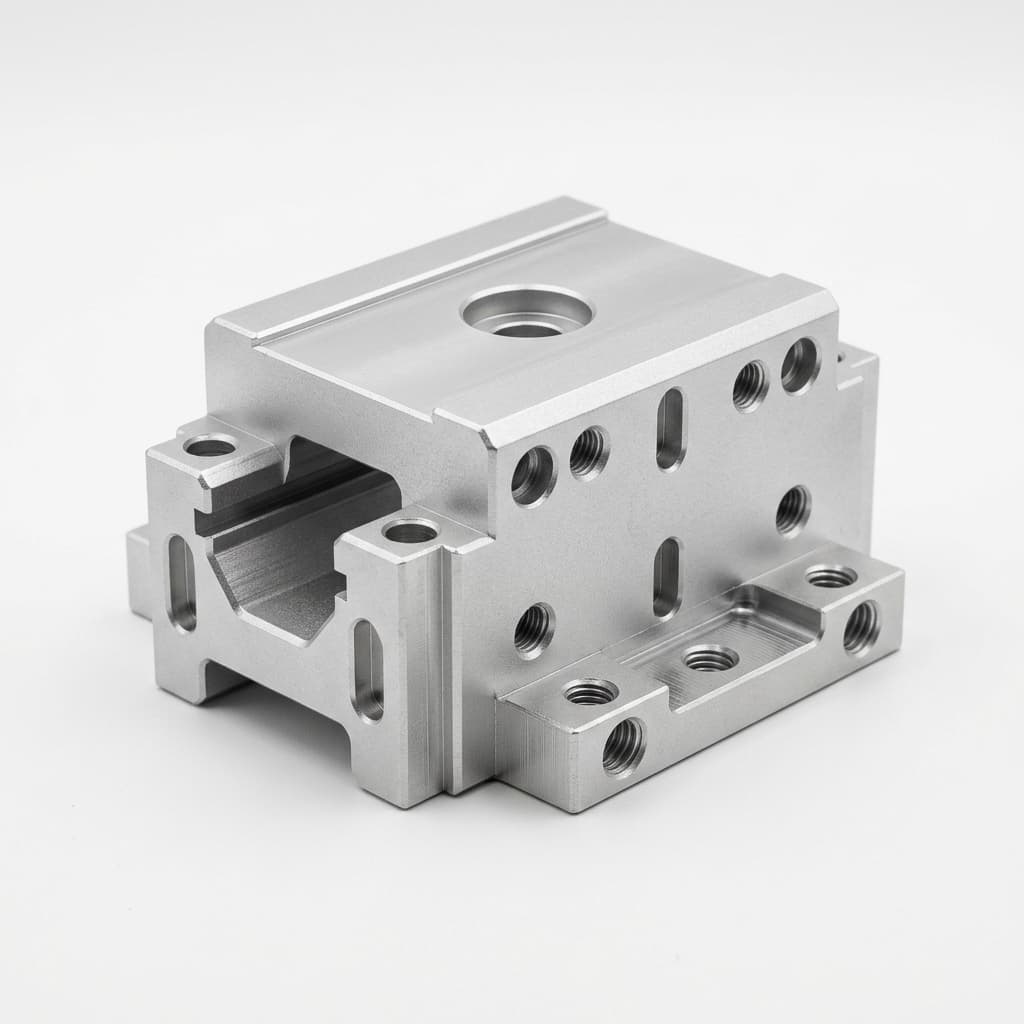
Two-Phase D2C Cold Plate CNC DFM Playbook for AI Rack Programs
A practical DFM and validation checklist for two-phase D2C cold plate machining, from micro-channel geometry to leak-test acceptance criteria.
AI rack deployment delays are now frequently caused by thermal hardware readiness, not by GPU allocation alone. In two-phase direct-to-chip (D2C) programs, cold plate machining quality controls the entire release path: if sealing interfaces, channel geometry, and validation method are not locked early, pilot lots become a rework loop.
For capability scope, see Two-Phase D2C Cold Plate CNC.
Scope boundary before RFQ
This page focuses on machined thermal hardware governance for two-phase D2C programs:
- cold plate body geometry and interface datums;
- sealing-surface consistency and leak-risk controls;
- inspection and release evidence required for pilot handoff.
It does not replace system-level thermal architecture decisions (coolant chemistry, facility loop design, rack control logic). Those should be fixed by buyer engineering before supplier route lock.
Failure map: where pilot lots usually fail
| Node | Typical failure pattern | Root cause class | Containment action |
|---|---|---|---|
| Channel geometry | First lot passes basic dimensions but misses thermal target | Toolpath and tolerance strategy not aligned to heat-flux objective | Reclassify CTQ features by thermal function and rerun DFM closure |
| Sealing interface | Pressure-hold instability across samples | Flatness/roughness assumptions not translated into measurable criteria | Freeze interface baseline and define explicit pass/fail method |
| Port/thread interface | Connector mismatch during integration | Datum chain does not match mating standard | Attach interface standard and mating revision at RFQ kickoff |
| Validation records | Engineering rejects report package despite acceptable hardware | Report format and method never agreed | Define required evidence pack before pilot start |
The pattern is consistent: most schedule losses are not machining speed problems, but definition and evidence problems.
DFM package that removes quote noise
A usable RFQ input should be organized in four blocks. If one block is missing, comparison across suppliers becomes guesswork.
| Package block | Minimum fields | Why it matters |
|---|---|---|
| Geometry intent | CAD revision, CTQ channel zones, sealing no-go areas | Prevents hidden interpretation drift |
| Process assumptions | Material grade, machining constraints, exclusions | Avoids unrealistic route selection |
| Validation method | Pressure/leak method, limit values, sample policy | Converts quality claims into auditable tests |
| Program cadence | Pilot quantity, repeat-lot range, change-control owner | Keeps schedule and engineering ownership aligned |
Validation flow for two-phase D2C release
Gate criteria for approval discipline
| Gate | Owner | Exit criteria | Stop condition |
|---|---|---|---|
| G1 RFQ baseline | Buyer engineering + sourcing | CTQ list, datums, interface standard locked | Missing mating standard revision |
| G2 DFM closure | Supplier engineering | Toolpath strategy and measurement points approved | No measurable definition for sealing interface |
| G3 Pilot validation | Quality + program owner | Leak, dimensional, and report package all pass | Any repeated fail on same CTQ class |
| G4 Release decision | Program manager | Pilot evidence accepted and ramp assumptions frozen | Open ownership on revision/change control |
The key is strict gate ownership. Without explicit owner names, teams drift into email-driven ambiguity and lose weeks.
RFQ fields you can copy
field,example
project_id,AI-RACK-TP-D2C-017
cad_revision,R3
material_grade,C10100 or equivalent project-defined grade
ctq_features,seal_flatness|channel_width|port_datum_chain
leak_test_method,pressure-hold with agreed fixture and dwell
acceptance_limit,project-defined threshold per node
pilot_qty,12
repeat_lot_range,80-200
change_control_owner,buyer_npi_engineering
required_reports,cmm|leak-report|revision-trace-log
Practical decision rule
If your team cannot answer three questions in one meeting, do not release pilot PO yet:
- Which CTQ features directly map to thermal or leak risk?
- Which method defines leak pass/fail and who signs it?
- Which evidence files are mandatory for release?
When these answers are explicit, two-phase D2C cold plate programs move from reactive troubleshooting to predictable execution.
More Posts
CNC vs MIM for Robotics Actuators - Cost and Validation Framework
Practical decision framework for actuator teams comparing CNC-first and MIM-transition routes across volume bands, tolerance risk, and pilot release gates.

PM MIM DFM Handoff - Prototype to Pilot Control Plan
Detailed handoff protocol for PM/MIM transition programs, including data package requirements, gate governance, and escalation rules for robotics hardware teams.
Digital Product Passport (DPP) Data Readiness for CNC Machined Assemblies
A 2026 procurement guide to CNC machining supplier DPP readiness under EU ESPR, with data vectors, RFQ audit checks, source limits, and buyer actions.