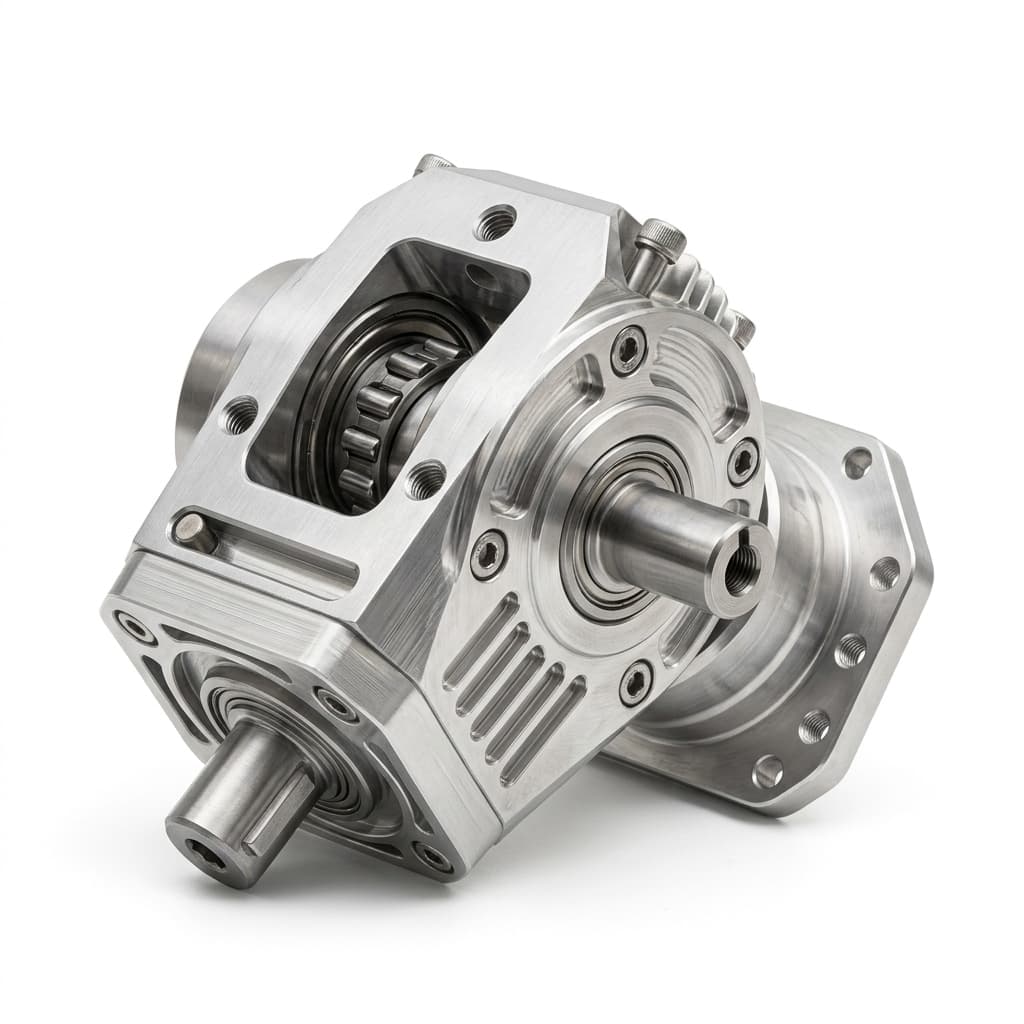
CNC vs MIM for Robotics Actuators - Cost and Validation Framework
Practical decision framework for actuator teams comparing CNC-first and MIM-transition routes across volume bands, tolerance risk, and pilot release gates.
Teams usually ask one wrong question first: "Which route is cheaper?"
For robotics actuator programs, the better first question is: "Which route is valid at our current revision maturity, tolerance class, and annual volume band?"
Positioning bridge: CNC vs MIM is the route-transition layer in Linkup's robotics motion hardware thread. It keeps actuator-adjacent parts connected to complex CNC interfaces, pilot evidence, and partner-routed powder metallurgy review without turning the page into a generic manufacturing catalog.
Related pages:
- Powder Metallurgy Transition for Robotics Components
- Titanium MIM Components for Robotics
- Product Families by Thread Role
- Robotics & Automation Solution Route
Execution scope note
This article is a decision framework. Program execution can combine Linkup-led machining/integration with qualified partner process routing when required by geometry class, volume stage, or validation path.
Decision baseline before any quote comparison
Lock these four fields before you compare suppliers:
- Revision stability (ECO frequency in the last 6-8 weeks)
- CTQ class split (critical datum features vs repeat geometry features)
- Volume profile (pilot and 12-month forecast)
- Acceptance evidence package (what data must be attached to release)
Without this baseline, cost comparisons are mostly noise.
Route-fit matrix for actuator-adjacent parts
| Decision axis | CNC-first route | MIM-transition route | Use rule |
|---|---|---|---|
| Revision velocity | Strong when CAD changes weekly | Weak under frequent ECO churn | If ECO frequency is high, keep route CNC-first |
| CTQ tolerance class | Best for tight datums and fit-critical interfaces | Better for repeatable non-datum geometry families | Split by feature class, not by part name |
| Pilot lot predictability | High controllability at low quantity | Requires clearer process window and acceptance boundaries | Do not route-lock before pilot gate evidence is frozen |
| Unit economics at scale | Usually rises with cycle-time pressure at high volume | Usually improves after geometry and volume stabilize | Transition only when forecast and geometry are stable |
| Containment flexibility | Fast fallback and correction loops | Slower if process route assumptions are incomplete | Always keep a fallback machining path through early pilot and repeat-planning stages |
Volume-band planning model
A practical starting point:
- Under 300 units/year: CNC-first default
- 300-3,000 units/year: mixed route by feature class
- Over 3,000 units/year: transition candidates can scale after pilot acceptance gates pass
This model is not universal, but it forces explicit assumptions and avoids late-stage route churn.
Visual: transition timing logic
CNC to MIM Transition Economics
Volume-based unit cost intersection modeling
Validation gates that prevent expensive reversals
Use a four-gate release model:
G1 Design freeze
Exit criteria: CTQ split and route assumptions frozen
Minimum evidence: Revision pack + feature-class matrix
G2 Process readiness
Exit criteria: Work instructions and inspection path approved
Minimum evidence: Route checklist + method sheet
G3 Pilot acceptance
Exit criteria: CTQ pass and failure-mode containment confirmed
Minimum evidence: Pilot report + NCR closure log
G4 Repeat-route release
Exit criteria: Forecast stability + fallback plan documented
Minimum evidence: Repeat-route decision sheet + owner signoff
If one gate is open, route lock is premature.
RFQ block for fair route comparison
Program: [name]
Part family: [actuator-adjacent components]
Current route: [CNC-only / mixed]
Pilot qty / annual forecast: [x / y]

CTQ split:
- Critical datums:
- Transition candidate features:

Acceptance package required:
- CMM fields:
- Pilot gate data:
- Containment and fallback plan:
Final decision rule
Choose the route that maximizes release confidence per milestone, not the route that only minimizes quoted unit price.
Author

Categories
More Posts
Magnetic Assembly Prototype-to-Pilot Gate Review Template
Gate review model for moving magnetic assembly projects from prototype approval to stable pilot execution with measurable quality, process, and shipment controls.
Tight Tolerance Fallacies in Precision CNC Machining - A Cost Guide for Buyers
Use this buyer guide to estimate tight tolerance CNC machining costs, challenge over-toleranced drawings, and request a DFM quote with confidence.
Digital Product Passport (DPP) Data Readiness for CNC Machined Assemblies
A 2026 procurement guide to CNC machining supplier DPP readiness under EU ESPR, with data vectors, RFQ audit checks, source limits, and buyer actions.