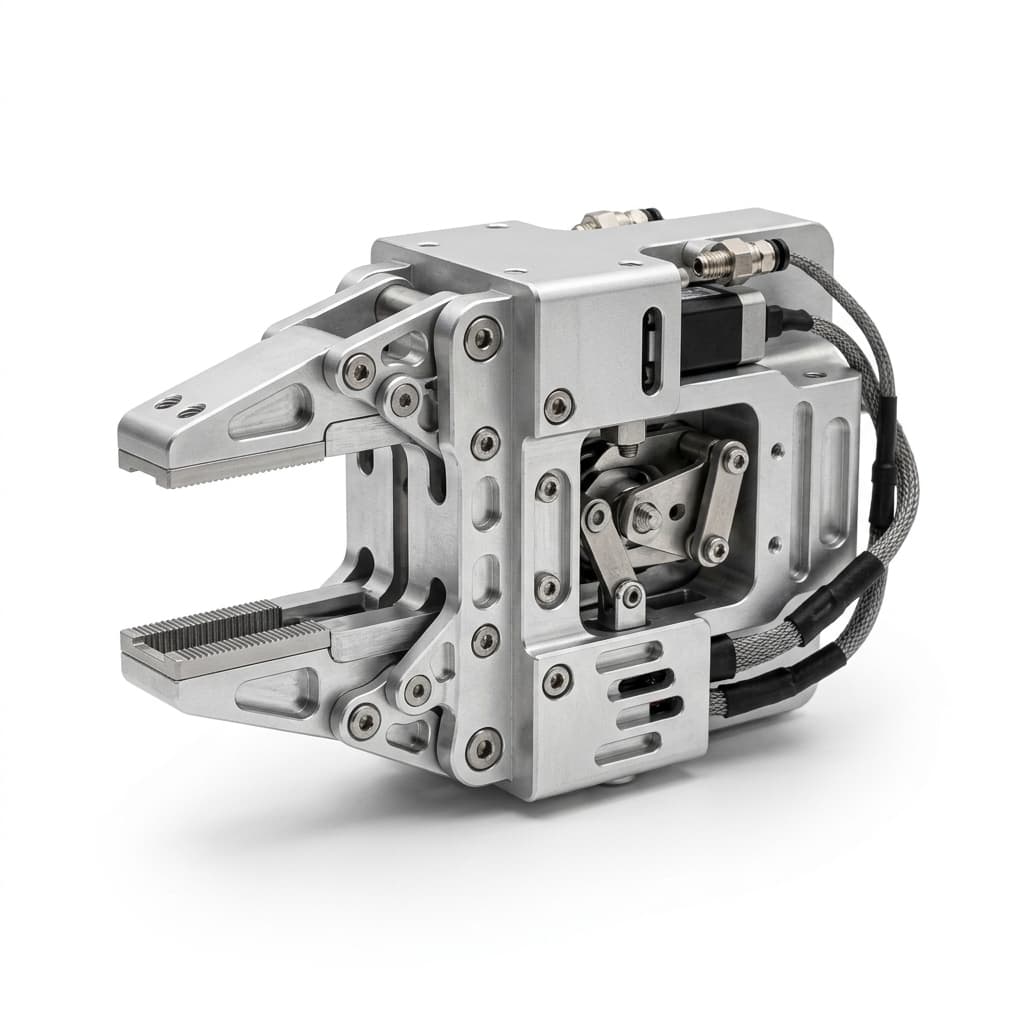
Digital Product Passport (DPP) Data Readiness for CNC Machined Assemblies
A 2026 procurement guide to CNC machining supplier DPP readiness under EU ESPR, with data vectors, RFQ audit checks, source limits, and buyer actions.
One-line decision (as of July 2026): With the EU Ecodesign for Sustainable Products Regulation (ESPR) rolling out, procurement teams should stop treating static PDF certificates as sufficient evidence for affected product groups and instead request machine-readable Digital Product Passport (DPP) data that can trace material origin, machining energy, and metrology metrics.
As global manufacturing supply chains digitize in response to the European Union’s ESPR, the definition of a "delivered machined component" is changing. It is no longer sufficient for a precision machining supplier to simply ship a crate of aluminum actuator housings or stainless steel manifolds that meet dimensional tolerances. For affected product groups, the physical component increasingly needs to be linked to its digital twin: a structured data payload known as the Digital Product Passport (DPP).
This guide provides OEM procurement, supply chain, and New Product Introduction (NPI) engineering teams with a framework to audit and select precision machining partners capable of supporting DPP evidence requests. If you source CNC machined hardware that eventually integrates into products sold within the EU (such as industrial robotics, medical devices, or energy infrastructure), transitioning your RFQ process to include "Data Readiness" is now a practical sourcing gate for regulated or soon-to-be-regulated product groups.
Related capabilities: Turnkey Assemblies, Quality & Validation, RFQ Toolkit.
Applicability Boundary
This framework applies to OEMs and Tier-1 integrators procuring custom, build-to-print mechanical components (milled, turned, or ground) via global supply chains. It is specifically targeted at supply chains where the end product falls under EU ESPR scrutiny.
Not Applicable For: Procurement of commercial-off-the-shelf (COTS) fasteners (where the OEM of the fastener manages the DPP) or prototype runs purely for internal R&D not entering the commercial market.
Key Conclusions for 2026 Procurement
- The PDF Alone Is Insufficient: Traditional Certificates of Conformance (C-of-C) and material certs delivered as scanned PDFs cannot be easily parsed into a centralized DPP system. Suppliers should be able to provide structured data (e.g., JSON, XML) via API or standardized portals.
- Mid-Tier Bottleneck: Most precision machine shops under $50M in revenue lack the IT infrastructure to map their ERP/QMS data to OEM passport requirements, making the CNC tier a high-risk bottleneck for ESPR compliance.
- Data is a Cost Center: Expect suppliers to charge a premium for DPP-compliant data packages. Procurement must factor this "data integration cost" into the Total Cost of Ownership (TCO), rather than comparing suppliers strictly on physical piece-price.
- Interoperability Standards: OEMs should mandate that suppliers adopt open architectures, such as the Asset Administration Shell (AAS), rather than locking supply chains into proprietary tracing software.
The CNC Machining Data Disconnect
The objective of the Digital Product Passport is to provide a "single source of truth" for a product's lifecycle, enabling circular economy practices, repairability, and carbon tracking. For an OEM building a robotic arm, the final DPP is a rollup of the passports of its sub-components.
Precision machining poses a unique challenge. Unlike a microchip, which has a highly standardized manufacturing data footprint, a custom CNC machined manifold is subjected to highly variable subtractive processes. A single block of 6061-T6 aluminum might undergo:
- Rough milling (high spindle load, specific energy footprint)
- 5-axis finish milling (tight tolerance, specific coolant application)
- Stress relief baking
- Hard coat anodizing (sub-contracted to a finishing house)
- Coordinate Measuring Machine (CMM) inspection
Historically, the data generated during these steps remained siloed. The material mill provided a heat lot certificate. The CNC machine logged spindle loads on its local controller. The CMM generated a local PDF report. The anodizer sent a physical paper cert with the return shipment.
Under ESPR, the OEM is responsible for aggregating the relevant product-level data required by delegated acts, including environmental footprint and material composition where applicable. If the CNC supplier cannot digitally aggregate the data from the raw material mill, their own shop floor, and their secondary processors, the OEM may be unable to complete the final product's DPP evidence package for affected EU market categories.
Mapping Physical CNC Processes to DPP Data Vectors
To understand what data must be requested during the RFQ process, procurement teams must map the physical manufacturing steps to their corresponding digital data requirements.
Below is the structural mapping buyers can request for a DPP-ready data payload for a CNC machined component:
| Manufacturing Phase | Physical Process | DPP Required Data Element | Standardized Data Format / Source | Compliance Value |
|---|---|---|---|---|
| 1. Raw Material Sourcing | Purchasing billet, plate, or casting from a foundry or service center. | Exact chemical composition, recycled content percentage, Environmental Product Declaration (EPD), Heat Lot Number. | Digital EPD (ISO 14025), XML-based Material Test Report (MTR). | Proves material safety, origin, and baseline embedded carbon. |
| 2. Subtractive Machining | CNC milling/turning to remove material. | Machine energy consumption (kWh per batch), Buy-to-Fly ratio (starting mass vs final mass). | Shop floor IoT gateways (MTConnect, OPC UA) feeding into supplier ERP. | Calculates the manufacturing carbon footprint (Scope 3 for OEM). |
| 3. Coolant & Consumables | Application of cutting fluids, tool wear. | Types of chemicals used (e.g., PFAS-free verification), recycling rate of coolants. | Chemical compliance declarations linked to specific batch routing. | Ensures compliance with REACH, RoHS, and emerging PFAS bans. |
| 4. Chip Recycling | Disposing of the metal scrap generated during machining. | Segregation protocols, destination of scrap (certified closed-loop recycler vs open market). | Digital waste transfer notes. | Offsets carbon penalties by proving high-quality circularity. |
| 5. Secondary Finishing | Anodizing, plating, passivation, or heat treatment. | Process chemicals used, energy intensity of plating baths, sub-tier supplier ID. | API integration between the CNC shop and their finishing subcontractor. | Captures hidden emissions and toxic chemical usage in the supply chain. |
| 6. Quality Metrology | Dimensional inspection via CMM, OGP, or laser scanning. | First Article Inspection (FAI) data, CPK values for critical-to-quality (CTQ) features. | AS9102 Rev C XML data, QIF (Quality Information Framework) output. | Validates component longevity and repairability parameters. |
| 7. Packaging & Logistics | Boxing the parts and shipping to the OEM. | Packaging material composition (e.g., recyclable cardboard vs single-use plastics), freight emissions. | Supplier ERP shipping module data. | Contributes to the overall logistical carbon footprint of the delivered part. |
Visualizing the DPP Data Flow
The following diagram illustrates how data must flow from the supply chain tiers up to the OEM to satisfy the Digital Product Passport requirement. The CNC Machine Shop acts as the critical aggregation node.
CNC Supplier Data-Readiness Audit Checklist
Do not wait until a product is halted at EU customs to discover your supplier's data architecture is insufficient. Integrate the following checklist into your supplier auditing and RFQ processes immediately.
Section 1: IT & Quality Systems Infrastructure
- ERP API Access: Can the supplier push material lot data and shipping information via a secure REST API or EDI interface, rather than relying on email and PDFs?
- QIF Compliance: Does the supplier's quality department use the Quality Information Framework (QIF) or AS9102 XML standards for exporting inspection data?
- Cybersecurity Posture: Since DPPs require exposing deep manufacturing data, does the supplier hold ISO/IEC 27001 or CMMC 2.0 Level 2 certification to ensure your proprietary design data is protected during transmission?
Section 2: Manufacturing Data Granularity
- Machine-Level Energy Monitoring: Can the supplier isolate the power consumption (kWh) to the specific machine center running your batch, or do they only have facility-wide utility bills?
- Scrap Segregation Proof: Does the supplier maintain auditable logs of alloy-specific chip segregation to support circular economy carbon credits?
- Coolant & Consumable Tracing: Can the supplier provide a digital bill of substances (BOS) proving that no restricted PFAS chemicals were used in the cutting fluids during the machining of your specific lot?
Section 3: Sub-Tier Management
- Digital Flow-Downs: How does the CNC supplier mandate data requirements to their local anodizers, platers, or heat treaters?
- Material C-of-C Digitization: Does the supplier manually type heat lot numbers into their ERP, or do they ingest digital material certificates directly from the foundry?
Managing the Cost of Data Integration
Implementing DPP-compliant workflows is not free. A CNC machine shop must invest in software licenses (ERP modules, MTConnect interfaces), sensor hardware for older machines, and IT personnel to manage API endpoints.
When evaluating quotes in 2026, buyers will notice a bifurcation:
- The Legacy Quote: Low piece-price, high physical quality, but zero structured data capability. The OEM absorbs the massive overhead of manual data entry and risks regulatory non-compliance.
- The Data-Ready Quote: Higher amortized unit cost, but the parts arrive with a DPP-ready digital payload that can be mapped into the OEM's PLM/AAS system.
Procurement Strategy: Treat data as a Line Replaceable Unit (LRU) on the BOM. If a supplier's piece-price is $5 cheaper, but they cost your compliance team $10 in manual data processing and audit risk per part, the true cost of the legacy quote is higher. Prioritize suppliers who have proactively invested in their digital twin capabilities.
Frequently Asked Questions (FAQ)
1) Do all CNC machined parts require a Digital Product Passport?
Not immediately. The ESPR is rolling out via delegated acts targeting specific high-impact product groups first (e.g., batteries, textiles, iron/steel/aluminum, electronics). However, if your machined part is a sub-component of a regulated product (like an EV battery enclosure or a commercial server cooling manifold), the data must be provided to the OEM to complete the final product's DPP.
2) We already require AS9100 and ISO 9001. Isn't that enough?
No. ISO 9001 and AS9100 govern the existence of a quality management system and traceability, but they do not mandate the format of the data exchange or the specific environmental metrics (like embedded carbon) required by the ESPR. A supplier can be perfectly AS9100 compliant while keeping all their records in non-machine-readable PDFs stored in filing cabinets.
3) What format should we request the data in?
The European Commission heavily favors decentralized, open standards. The Asset Administration Shell (AAS) is emerging as the preferred standard for creating interoperable digital twins. Procurement should ask suppliers if their ERP/QMS can output AAS-compliant JSON or XML files.
4) Will this expose our proprietary CAD data to regulators or competitors?
No. The DPP is designed with tiered access rights. Regulatory bodies may see the embedded carbon and material safety data, while recyclers may only see the alloy composition. Your proprietary geometric tolerances (the 3D CAD model) remain securely guarded between you and the CNC supplier. This highlights the importance of the supplier's cybersecurity posture.
5) Can we retrofit existing inventory with DPP data?
This is extremely difficult and often impossible. If the primary energy data or material EPD was not captured at the time of machining, generating accurate retrospective data may require conservative default values, supplier requalification, or expensive forensic metallurgical testing. It is far cheaper to source correctly from the start.
Sources & References
- European Commission - Ecodesign for Sustainable Products Regulation (ESPR): Official guidelines on the implementation of the Digital Product Passport. ESPR Official Site
- Industrial Digital Twin Association: Asset Administration Shell (AAS) specifications for interoperable digital twin data models. AAS Specifications
- Quality Information Framework (QIF): ANSI/ISO standard for interoperable manufacturing quality data. QIF Standards
Secure Your Supply Chain's Digital Future
The transition to Digital Product Passports is not just an IT challenge; it is a fundamental shift in how physical hardware is sourced and validated. At Linkup Precision, we have architected our CNC machining workflows to provide not only micron-level physical tolerances but also the structured, interoperable data payloads needed by affected 2026 EU market programs.
From API-driven metrology reporting to secure, machine-level energy monitoring, we deliver the physical component and its digital twin simultaneously.
Ready to future-proof your NPI process? Contact our engineering and compliance team to discuss how our data-ready machining services can integrate with your PLM architecture.
Author

Categories
More Posts
EU CBAM Data-Readiness for CNC Aluminum Components: A Procurement Checklist
Use this 2026 procurement checklist to source CNC aluminum components for EU CBAM readiness: emissions evidence, supplier questions, and RFQ controls.
Blind-Mate QDC Body Machining Checklist for Leak-Risk Control
Engineering checklist for blind-mate QDC metal part execution, including valve-seat geometry, sealing interfaces, and bounded leak-risk validation.
CNC vs MIM for Robotics Actuators - Cost and Validation Framework
Practical decision framework for actuator teams comparing CNC-first and MIM-transition routes across volume bands, tolerance risk, and pilot release gates.